
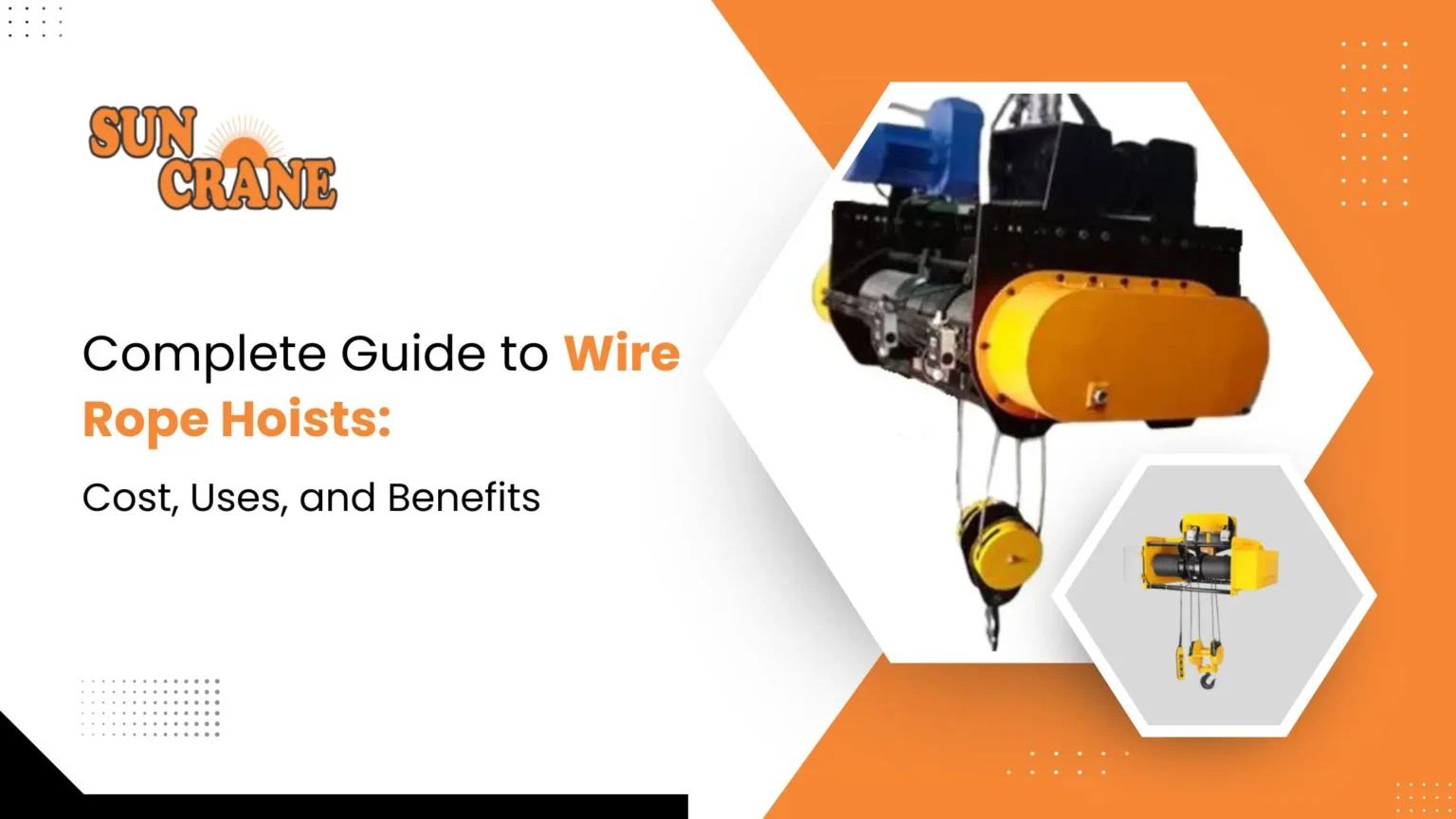
Wire rope hoists have become an integral part of material handling in any industry. The use of such hoists finds extensive applications in lifting, lowering, and transporting materials. The importance of these hoists can be observed in any sector, whether it is manufacturing, construction, or warehousing.
Knowledge of wire rope hoist functionality, applications, cost considerations, and advantages might enable companies to make well-informed purchasing decisions. Similarly, wire rope spare part components play a very important role in defining functionality and longevity related to these machines. This information sheet will give you a comprehensive insight to enable you to select an appropriate solution.
What Is a Wire Rope Hoist?
A wire rope hoist is a mechanical lifting device that uses a wire rope wound around a drum to lift or lower heavy loads. It is powered either electrically or manually and is commonly mounted on cranes, gantries, or monorail systems.
Main Components of a Wire Rope Hoist
- Wire rope and drum
- Electric motor and gearbox
- Hook block and safety latch
- Control panel and braking system
Each component must work seamlessly, making high-quality wire rope spare part availability critical for smooth operations.
Common Uses of Wire Rope Hoists
1. Manufacturing and Industrial Plants
Wire rope hoists are extensively used in factories for handling raw materials, machine parts, and finished goods. They improve efficiency while reducing manual labor and the risk of workplace injuries.
2. Construction and Infrastructure Projects
In the construction site environment, the application of the wire rope hoist is in the lifting of steel structures, concrete materials, as well as heavy equipment. The hoist has high lifting capacity.
3. Warehouses & Logistics
Wire rope hoists are used for stacking, loading, and unloading heavy goods in the warehouses. They assist in optimizing the usage of space and increasing the speed of material flow.
4. Power Plants & Heavy Engineering
Power stations, oil refineries, and heavy engineering works rely on wire rope hoists for their maintenance and installation jobs that demand precision and accuracy.
Types of Wire Rope Hoists
Selecting the right type depends on load requirements, usage frequency, and working environment.
Electric Wire Rope Hoist
This is the most common type used in industrial and construction applications. It offers precise control, high lifting capacity, and is suitable for continuous operation indoors or outdoors.
Pneumatic (Air) Wire Rope Hoist
Pneumatic Wire Rope Hoist operates using compressed air, making it ideal for hazardous or explosive environments where electricity is unsafe. It is durable, spark-free, and performs well in wet or dusty conditions.
Hydraulic Wire Rope Hoist
This hoist provides smooth lifting with very high load capacity. It is commonly used in heavy-duty applications such as offshore platforms, shipyards, and mining operations.
Cost Factors of Wire Rope Hoists
The cost of a wire rope hoist varies based on several factors:
1. Load Capacity
This is because the greater the lifting force, the heavier the components need to be to withstand
2. Lifting Height & Speed
Custom lifting heights and speed also contribute to the cost.
3. Duty Class
In principle, cranes built for long-term or heavy-duty service cost more but are more durable.
4. Quality of Spare Parts
The availability and quality of wire rope spare parts components have a direct influence on maintenance costs.
5. Installation and Customization
Increased costs of special mounting systems, automation or safety improvements.
Key Benefits of Wire Rope Hoists
1. High Lifting Capacity
Wire rope hoists are capable of handling loads with a lot of efficiency and are ideal for heavy load requirements.
2. Enhanced Safety
Modern wire rope hoists have various safety devices like overload protection, emergency brakes, and limit switches, which minimize the occurrence of accidents.
3. Long Service Life
Under proper maintenance and genuine spare parts for the wire rope, the longevity of the hoists is quite high.
4. Precision and Control
Smooth lifting/lowering actions facilitate precise material handling, which can be quite significant for assembly or maintenance.
5. Cost-Effective Over Time
Though higher initial costs could be involved, wire ropes function with outstanding profitability on account of their reliability, functionality, and minimal downtime.
Maintenance and Spare Parts Importance
Regular inspection and timely replacement of worn components are essential for safe operation. Using authentic wire rope spare parts ensures:
- Optimal load performance
- Reduced breakdowns
- Compliance with safety standards
Ignoring maintenance can lead to unexpected failures, higher repair costs, and safety hazards.
How to Choose the Right Wire Rope Hoist?
When selecting a wire rope hoist, consider:
- Load weight and lifting frequency
- Working environment (indoor/outdoor)
- Availability of service and spare parts
- Compliance with industry safety standards
Partnering with a trusted wire rope hoist supplier ensures proper guidance, installation support, and easy access to replacement parts.
Conclusion
Wire rope hoists always act as a mainstay in the field of lifting for industries, in terms of strength, safety, and efficiency for a wide array of industries. It is important to have an awareness about the application, cost involved, and benefits provided by the hoists to provide the correct one for a particular business to conduct operations. Another aspect to consider is the capability to acquire quality spare parts for the wire ropes. This is a significant consideration, as the quality of the spare part components would significantly impact the efficiency and safety offered by the hoist, and for this purpose, sun crane is a pioneer in ensuring a reliable supply in the market for a wide array of needs.