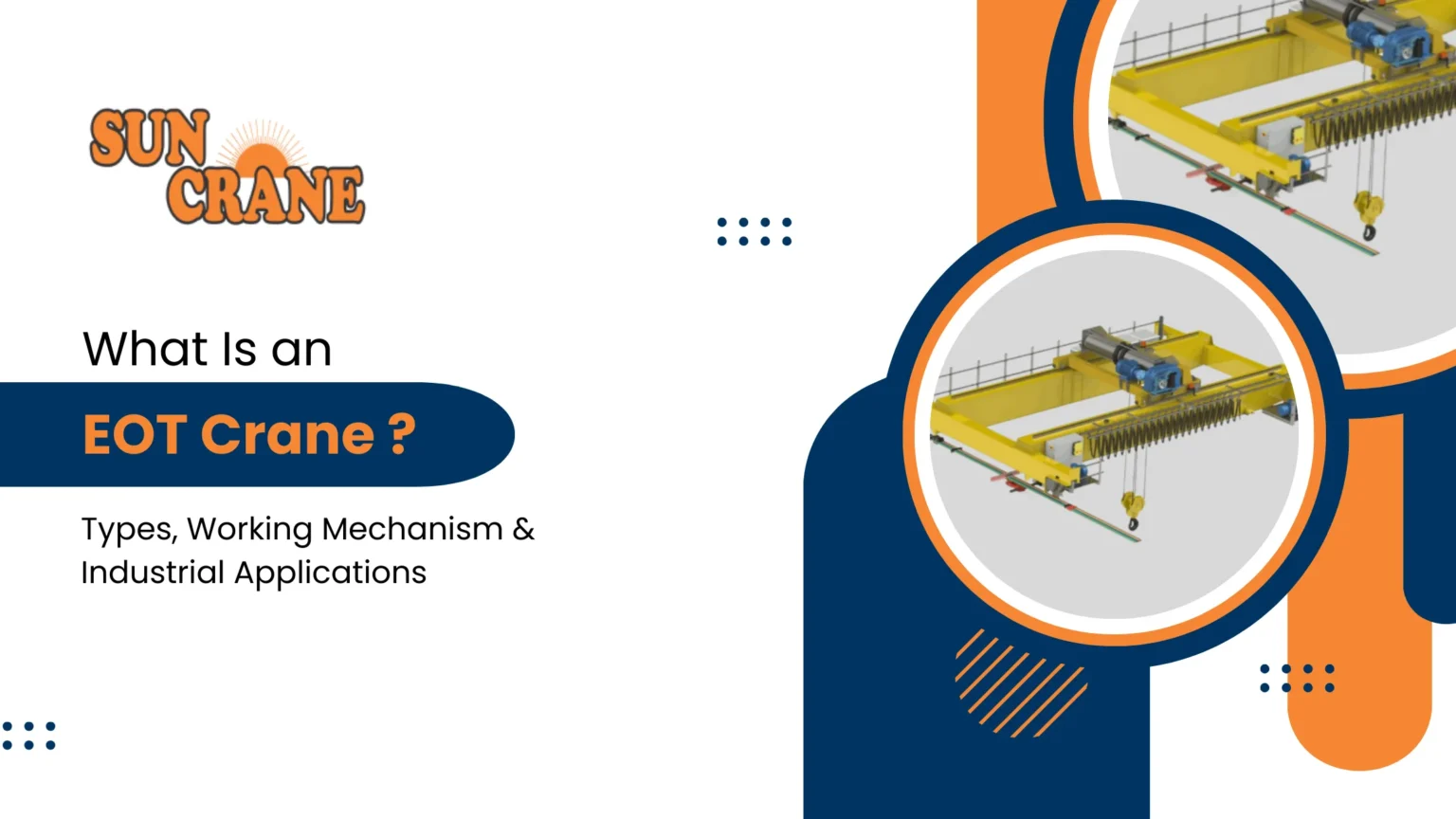
Efficient material handling is a critical requirement in modern industrial operations. Whether it is a manufacturing plant, steel fabrication unit, or warehouse facility, handling heavy loads safely and consistently is non-negotiable. This is where an EOT Crane becomes a core part of industrial infrastructure, enabling controlled lifting, precise movement, and safer work environments.
This blog explains the fundamentals of EOT cranes, their working mechanism, different types, and how they are applied across industries, with a practical, decision-oriented approach.
What Is an EOT Crane?
An Electric Overhead Traveling crane is a lifting system designed to move heavy materials horizontally and vertically within a fixed area. It operates on elevated runway rails, eliminating floor obstruction and improving operational flow.
These cranes are commonly used in facilities where loads range from a few tons to over 50 tons, and where repetitive lifting is part of daily operations.
Working Mechanism of an EOT Crane
The working mechanism is based on three synchronized movements that allow safe and efficient load handling.
1. Hoisting Mechanism
The hoist is the lifting unit powered by an electric motor. It uses a wire rope or chain system to raise and lower loads in a controlled manner. Load capacity, lifting speed, and duty cycle depend on the application and design specifications.
2. Cross Travel (Trolley Movement)
The trolley carries the hoist and moves horizontally across the bridge girder. This movement enables accurate positioning of materials across the width of the workspace, reducing manual intervention.
3. Long Travel (Bridge Movement)
The bridge structure moves along runway rails installed on both sides of the building. This allows the crane to cover the full length of the facility and transport materials efficiently between workstations.
Operation is managed through pendant controls, radio remote systems, or cabin operation, ensuring smooth coordination and improved safety.
Types of EOT Cranes and Their Applications
Understanding different eot crane types is essential for selecting the right system for specific industrial needs.
Single Girder EOT Crane
Used typically up to 20 tons, single girder cranes are suitable for light to medium-duty operations such as assembly shops, warehouses, and fabrication units. They are cost-effective and require less structural support.
Double Girder EOT Crane
Designed for heavy-duty and continuous operations, double girder cranes handle higher capacities and offer greater hook height. These are preferred in steel plants, heavy engineering units, and power projects where precision and reliability are critical.
Underslung EOT Crane
This type is used where headroom is limited. It runs on the bottom flange of runway beams and is suitable for specific industrial layouts with space constraints.
Choosing the wrong type can lead to inefficiency, higher maintenance costs, and safety risks, making proper assessment crucial.
Industrial Applications of EOT Cranes
EOT cranes are widely used across industries, including:
- Manufacturing and assembly plants
- Steel and metal processing facilities
- Warehousing and logistics centers
- Power plants and heavy equipment workshops
- Automotive and component manufacturing
By reducing manual handling and improving load control, these cranes enhance productivity while minimizing workplace accidents.
Need a Crane That Matches Your Load and Duty Cycle?
Industries operating in multiple shifts or handling loads above 10 tons require carefully engineered crane systems. Sun Cranes designs and manufactures customized EOT cranes based on load capacity, span, duty classification, and safety requirements ensuring long-term operational reliability.
Safety Standards and Compliance
Safety is a non-negotiable aspect of crane operation. EOT cranes are designed to comply with relevant IS standards and industrial safety norms. Key safety features include:
- Overload protection systems
- Limit switches for lifting and travel
- Emergency stop mechanisms
- Controlled acceleration and braking
Proper installation, periodic inspection, and preventive maintenance significantly reduce downtime and accident risk.
Benefits of Using EOT Cranes in Industry
- Efficient handling of heavy and repetitive loads
- Improved workplace safety
- Optimal use of vertical space
- Reduced manual labor and operator fatigue
- Consistent performance in demanding environments
These benefits make overhead crane systems a long-term asset rather than a short-term expense.
Choosing the Right EOT Crane Manufacturer
Selecting a reliable eot crane manufacturer in india is a critical decision. Beyond price, industries must consider design capability, material quality, safety compliance, and after-sales support.
An experienced manufacturer ensures the crane is engineered for actual working conditions, not just catalog specifications.
Conclusion
An EOT crane plays a vital role in safe and efficient industrial material handling. From understanding its working mechanism to selecting the right type and ensuring safety compliance, every decision impacts operational performance. Partnering with an experienced manufacturer like Sun Cranes helps industries achieve reliable lifting solutions that support productivity, safety, and long-term growth.