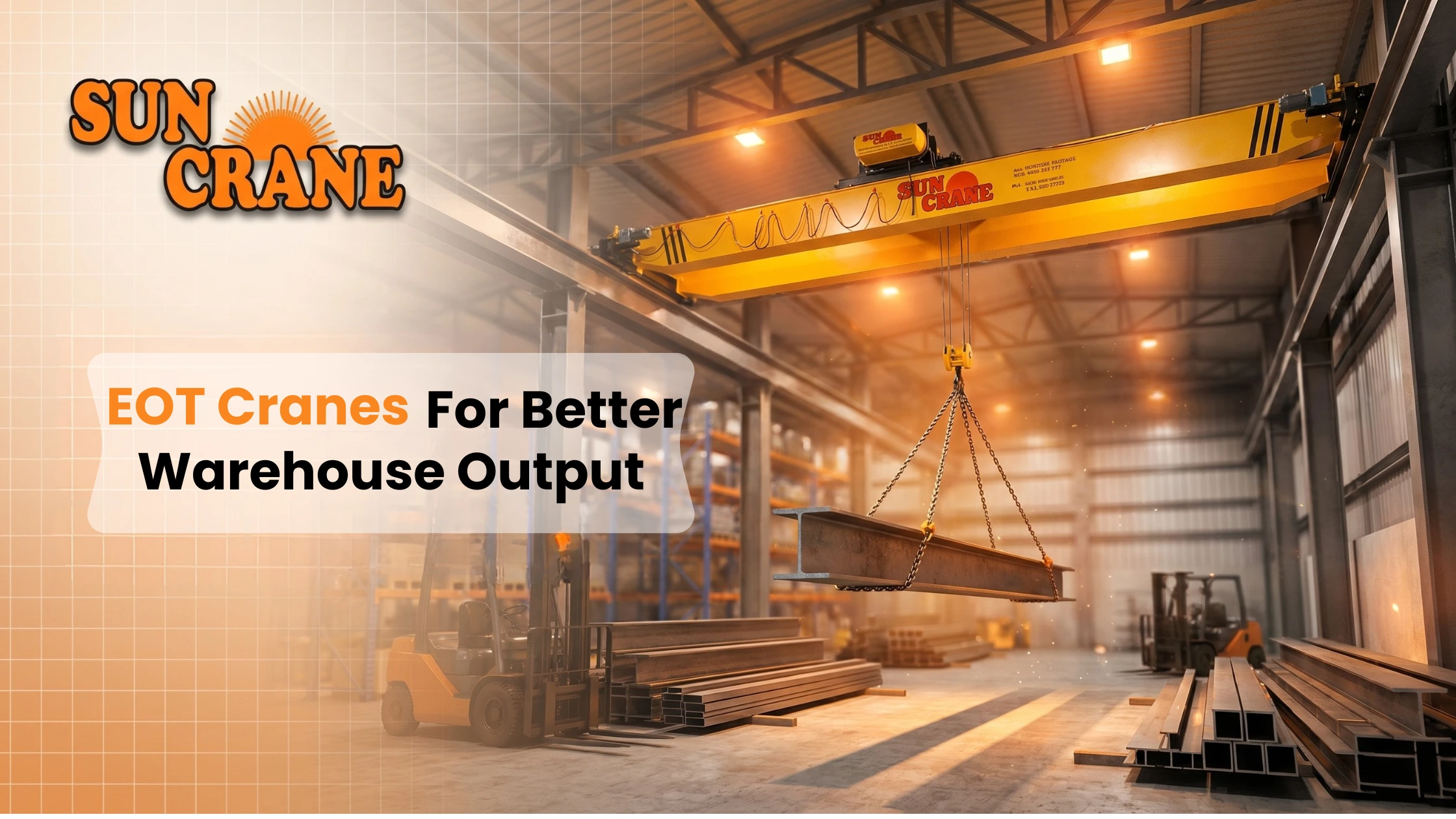
If you have ever watched workers struggle to manually shift heavy loads across a warehouse floor, you already know how much time and energy gets wasted. It’s not just slow; it’s exhausting, inefficient, and often risky. Delays in moving materials can disrupt the entire workflow, causing bottlenecks that affect productivity across departments. That’s exactly the problem EOT (Electric Overhead Travelling) cranes are built to solve. They bring speed, precision, and consistency into daily operations, allowing heavy materials to be moved safely and effortlessly. Once you’ve seen one in action, handling loads smoothly across the workspace without interruptions, it becomes clear why so many warehouses are making the switch and why going back to manual handling or traditional methods is no longer practical.
What Exactly Is an EOT Crane?
It’s a crane that runs on an overhead track system, moving loads horizontally across a workspace without taking up any floor space. No forklifts weaving between shelves, no teams of workers lifting things they shouldn’t, just smooth, controlled movement of heavy materials from point A to point B. They are common in manufacturing plants, steel yards, and large warehouses, but smaller operations are increasingly adopting them too, and for good reason.
Why Warehouses Are Making the Switch
Warehouses today are under constant pressure to move faster, reduce costs, and maintain high safety standards. Traditional material handling methods often fall short when it comes to efficiency and scalability. This is where EOT cranes are making a noticeable difference. By improving speed, optimizing space, and reducing manual effort, they help warehouses operate more smoothly and consistently.
Key ways EOT cranes help improve warehouse productivity include:
Getting Things Done Faster
Time is money in any warehouse. When a heavy pallet or machine part needs to move across the floor, every minute counts. EOT cranes cut that time down significantly; what might take a team of workers 20 minutes can happen in a fraction of that. Over a full workday, those savings add up fast.
Your Floor Space Actually Opens Up
One of the most underrated benefits is what happens to your floor once you go overhead. Forklifts need wide aisles. Workers need clear paths. EOT cranes need none of that. You suddenly have room you didn’t realize you were missing, a room that can be used for storage, better organization, or just safer movement around the facility.
Less Strain on Your Team
Repetitive heavy lifting is one of the leading causes of workplace injuries. Beyond the human cost, injuries mean downtime, compensation claims, and reduced morale. When a crane is handling the heavy work, your team can focus on tasks that actually require human skill and judgment, and they’ll be in better shape at the end of the shift.
A Safer Workplace Overall
Good EOT cranes come with built-in safety features, overload protection, emergency stop systems, and limit switches that reduce the chance of accidents significantly. It’s not just about protecting goods; it’s about making sure everyone goes home safely.
More Control, Less Damage
Anyone who’s worked with delicate or high-value materials knows the anxiety of moving them. EOT cranes give operators precise control over how loads are lifted and placed, which means fewer accidents, less damage, and a lot less stress on the floor.
Choosing the Right EOT Crane Manufacturer for Better Productivity
Here’s where many businesses go wrong: they focus only on price and overlook the bigger picture. The crane that seems cost-effective initially can lead to higher expenses later due to frequent breakdowns, maintenance issues, and inefficient performance.
When selecting an EOT crane manufacturer, it’s important to consider a few key factors that directly impact your warehouse productivity:
1. Industry Understanding:
Different industries have different requirements. A warehouse handling automotive parts will have very different needs compared to one managing fragile or high-value goods. A knowledgeable manufacturer will understand these differences and suggest the right solution.
2. Customization Capabilities:
Every warehouse layout is unique. A reliable manufacturer should be able to design and customize the crane according to your space, load capacity, and workflow requirements instead of offering a one-size-fits-all solution.
3. After-Sales Support:
Installation is just the beginning. Regular maintenance, quick service response, and availability of spare parts are essential to ensure smooth and uninterrupted operations.
4. Compliance and Safety Standards:
Safety should never be compromised. Always ensure that the crane meets all necessary industry standards and is equipped with essential safety features for long-term, risk-free usage.
Final Thought
Upgrading to an EOT crane is not just a capital investment; it’s a shift in how your whole operation flows. Work moves faster, your team works safer, and your space gets used the way it was meant to be. If you are based in Gujarat or the surrounding region, Sun Crane is one name worth looking into for reliable, well-built crane solutions that are designed with real industrial demands in mind.